
Regulation
Kratom Products in San Diego Draw Regulatory Focus Amid National Debate
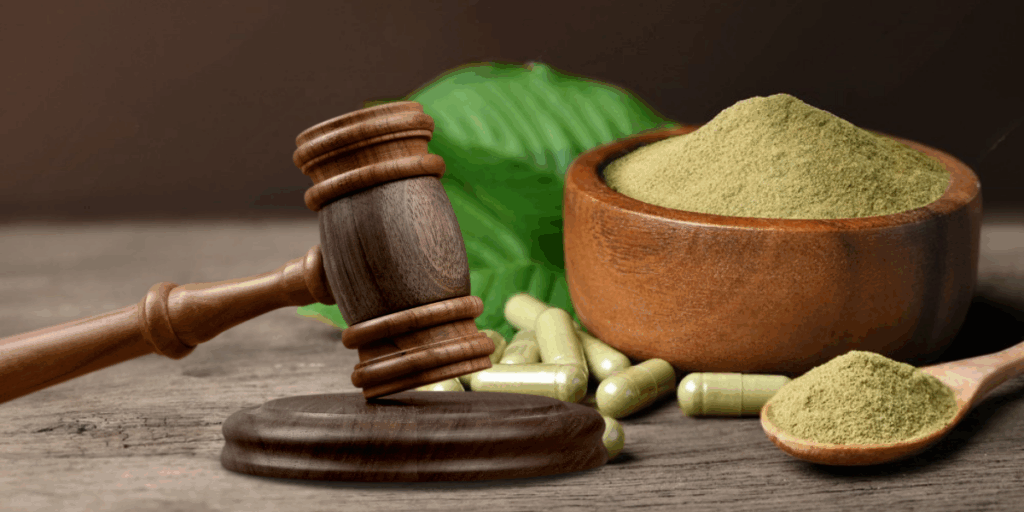
SAN DIEGO — Kratom-derived products remain widely available across San Diego County, prompting interest among regulators, industry stakeholders, and researchers alike. A recent NBC San Diego report highlights that stores are carrying formulations of kratom and related compounds, even as federal authorities explore heightened oversight.
Rather than framing these products as inherently dangerous, the emerging discourse leans toward closer study, clearer definitions, and selective regulation.
Marketplace snapshot in San Diego
According to the NBC San Diego article, kratom and formulations containing derivatives (such as 7-hydroxymitragynine, often abbreviated 7-OH) are present on shelves across the county. Some of these products are more concentrated or modified versions of what is traditionally consumed as raw leaf.
While the NBC piece emphasizes that federal calls for regulation are underway, local retailers and proponents note that “unaltered kratom leaf” differs from engineered formulations, and argue for nuanced handling rather than outright bans.
National regulatory developments
San Diego’s case reflects part of a broader pattern across the U.S., where both state legislatures and federal agencies are grappling with how to classify, monitor, and regulate kratom products.
- The U.S. Food and Drug Administration (FDA) has publicly warned consumers about serious adverse events tied to some kratom products, including liver toxicity, seizures, and the development of substance use disorder (SUD). However, in many reported cases, kratom was used in combination with other substances, which complicates attribution.
- A growing number of states are introducing or passing new laws to regulate kratom. According to Stateline, at least seven states considered bills during 2025 to tighten oversight, including measures on labeling, age limits, lab testing, or outright bans on certain forms.
- As of April 2025, 24 U.S. states plus the District of Columbia have some form of kratom regulation, according to a legislative overview by LAPPA.
- In Florida, a revised consumer protection law effective July 2025 prohibits synthetic kratom products (including high-potency 7-OH variants) and sets protocols for testing, labeling, and retail distribution.
- Meanwhile, the FDA has recommended classifying 7-hydroxymitragynine (a more concentrated and potent derivative) as a controlled substance under Schedule I, while not extending that classification to raw kratom leaf. That distinction reflects the agency’s focus on differences in potency and formulation.
- In one recent legislative move, Rhode Island’s House cleared a bill focused on consumer protection around kratom. According to reports, at least fourteen state legislatures had passed such bills by early 2025.
These developments illustrate a patchwork approach, with some jurisdictions taking stronger measures, others maintaining looser oversight, and many closely watching federal action.
Scientific and user perspectives
In the middle of regulation debates lies a complex mix of traditional use, emerging science, and user experience.
- Origins and traditional uses
Kratom (botanical name Mitragyna speciosa) is native to Southeast Asia, where it has been used for centuries as a stimulant in low doses, and for its relaxing or pain-relieving effects in larger doses. In traditional settings, leaves are chewed, brewed into teas, or used medicinally. - Pharmacology and composition
The plant contains many alkaloids; two of the most studied are mitragynine and 7-hydroxymitragynine. The relative proportion of these compounds can vary between plant strains or products. - Reported uses and motivations
Surveys and some observational studies suggest many users try kratom to manage pain, mood, or, in some cases, to reduce dependence on opioids. A review in Frontiers in Pharmacology notes that kratom is sometimes used as a self-administered alternative during opioid withdrawal. - Research status and uncertainties
Clinical trials in humans remain limited. Preclinical and observational data suggest kratom may have analgesic properties, but the size, consistency, and long-term safety of those effects are not yet well established. - Emerging clinical attention
At Johns Hopkins, researchers have initiated empirical studies to characterize withdrawal symptoms in chronic kratom users, helping clinicians make better decisions for those who may develop dependence.
Conclusion
Kratom occupies a middle ground: neither fully embraced as a safe, proven therapy nor uniformly treated as a dangerous substance. Instead, the evolving narrative in San Diego and across U.S. states suggests a push toward measured regulation rooted in evidence, rather than blanket judgments.
References:
- U.S. Food and Drug Administration. (n.d.). FDA and kratom. U.S. Food and Drug Administration. https://www.fda.gov/news-events/public-health-focus/fda-and-kratom
- Stateline. (2025). States weigh new regulations on kratom. Pew Charitable Trusts. https://www.pewtrusts.org/en/research-and-analysis/blogs/stateline
- Legislative Analysis and Public Policy Association (LAPPA). (2025). State laws and regulations on kratom. LAPPA. https://legislativeanalysis.org/kratom
- Florida Legislature. (2025). Florida Kratom Consumer Protection Act. Florida Senate. https://www.flsenate.gov/
- U.S. Food and Drug Administration. (2023). FDA recommends scheduling of 7-hydroxymitragynine. U.S. Department of Health and Human Services. https://www.fda.gov/news-events/press-announcements/fda-takes-steps-restrict-7-oh-opioid-products-threatening-american-consumers
- Associated Press. (2025). Rhode Island House passes kratom protection bill. AP News. https://apnews.com/
- Cinosi, E., Martinotti, G., Simonato, P., Singh, D., Demetrovics, Z., Roman-Urrestarazu, A., … & Corazza, O. (2015). Following “the roots” of kratom (Mitragyna speciosa): The evolution of an enhancer from a traditional use to increase work and productivity in Southeast Asia to a recreational psychoactive drug in Western countries. BioMed Research International, 2015, 968786. https://doi.org/10.1155/2015/968786
- Prozialeck, W. C., Jivan, J. K., & Andurkar, S. V. (2012). Pharmacology of kratom: An emerging botanical agent with stimulant, analgesic and opioid-like effects. Journal of the American Osteopathic Association, 112(12), 792–799. https://jaoa.org/article.aspx?articleid=2094342
- Grundmann, O. (2017). Patterns of kratom use and health impact in the U.S.—Results from an online survey. Drug and Alcohol Dependence, 176, 63–70. https://doi.org/10.1016/j.drugalcdep.2017.03.007
- Henningfield, J. E., Fant, R. V., & Wang, D. W. (2018). The abuse potential of kratom according to the 8 factors of the Controlled Substances Act: Implications for regulation and research. Psychopharmacology, 235(2), 573–589. https://doi.org/10.1007/s00213-017-4813-4
Garcia-Romeu, A., Cox, D. J., Smith, K. E., Dunn, K. E., & Griffiths, R. R. (2020). Kratom (Mitragyna speciosa): User demographics, use patterns, and implications for the opioid epidemic. Drug and Alcohol Dependence, 208, 107849. https://doi.org/10.1016/j.drugalcdep.2020.107849
Get new reporting by email
Federal and state kratom policy, enforcement actions and court decisions — sent when we publish, and nothing else.
The Kratom Council does not sell kratom. This list is used only to send our own articles — never product marketing, and it is never shared with or merged into any retailer’s mailing list. Unsubscribe any time.