
Regulation
A Baltimore Importer Is Charged With Trying To Buy Two Kratom Containers Out Of A Customs Hold. The Hold Has Stood Since 2014.
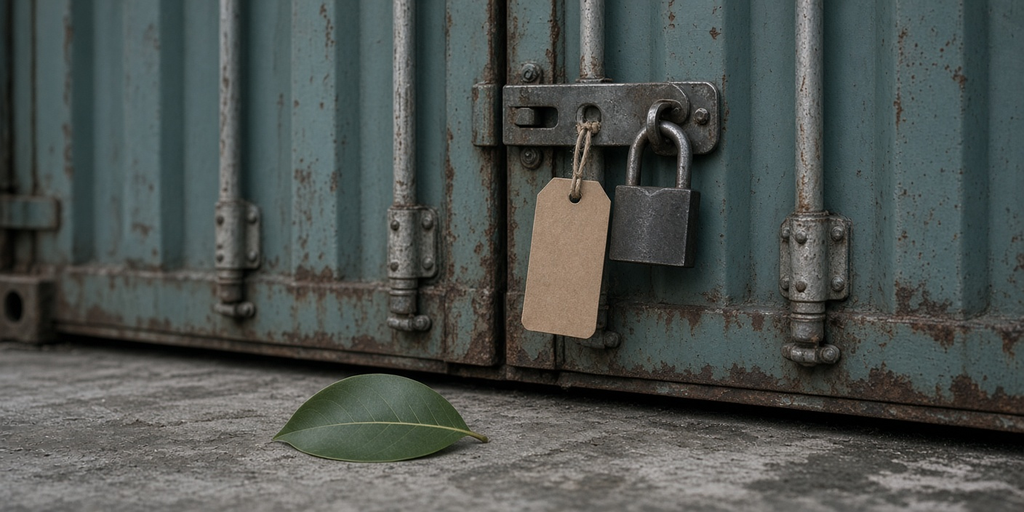
A federal grand jury in Maryland has indicted a Baltimore man on two counts of bribing a federal official. Prosecutors allege he offered to pay a U.S. Customs and Border Protection officer to release shipments of kratom that were being held at the Port of Baltimore. The U.S. Attorney's Office for the District of Maryland announced the indictment on Friday, November 6.
The defendant is Zen Aljufri, 61. According to the indictment as summarized by the U.S. Attorney's Office, he "corruptly offered to pay a CBP officer to release goods from a hold at a port of entry." Each count carries a maximum of 15 years in prison. An indictment is an accusation, not a finding of guilt, and the release notes that people charged by indictment are presumed innocent until proven guilty.
The case is a bribery prosecution, not a drug case. Kratom is not a federally controlled substance. What stood between the shipments and the U.S. market was an FDA import alert that has been in place for more than a decade, and the case is a rare public look at how that alert works on the ground.
What The Government Says Happened
The U.S. Attorney's Office release is brief. It says court documents describe an attempt to pay a bribe "to ensure a shipment of 'mithragyna speciosa,' which is related to kratom, could enter the country." It says the shipment was held because it was subject to the FDA's "Red List" under FDA Import Alert 54-15. The quoted spelling is the release's own. Mitragyna speciosa is the botanical name of kratom itself, and the import alert lists the two names as the same plant.
The fuller account comes from a sworn affidavit described by The Washington Times on November 7. According to that reporting, Mr. Aljufri's company was the consignee for two containers shipped from Malaysia. One left Malaysia on April 29 and reached Baltimore on June 8. The second left on July 12 and arrived on August 23. Both were placed on hold.
The Times reported that on August 31 Mr. Aljufri went to a CBP container examination station and offered an officer $5,000 per container to release them. The affidavit says the officer ordered him off the premises and recorded his license plate. In October, the Times reported, an undercover CBP officer called him to ask whether the offer still stood, and the two met in person on October 20. The affidavit says Mr. Aljufri wanted at least one container released before paying, and told the undercover officer that at least ten more shipments were inbound to the United States. This publication has not read the affidavit and relies on the Times account for these details.
The investigation was conducted by Homeland Security Investigations, the Department of Homeland Security Office of Inspector General, and the CBP Baltimore Field Office. The U.S. Attorney's Office said the prosecution is part of the Department of Justice Trade Fraud Task Force, which it describes as aimed in part at "smugglers who subvert import processes and seek to import prohibited goods."
The Rule The Shipments Ran Into
Import Alert 54-15 covers "dietary supplements and bulk dietary ingredients that are or contain Mitragyna speciosa or kratom." The FDA first issued it on February 28, 2014, according to a 2023 Department of Justice release. The version on the FDA's import alert database carries a published date of August 17, 2026, which indicates it has been revised this year.
The legal theory is stated in the alert itself. The FDA considers kratom a "new dietary ingredient" because, in the agency's words, there is no information demonstrating it was marketed as a dietary ingredient in the United States before October 15, 1994. The agency states that it has found no history of use or other evidence of safety sufficient to establish that kratom "will reasonably be expected to be safe as a dietary ingredient." On that basis the FDA treats kratom marketed as a dietary supplement or ingredient as adulterated under the Federal Food, Drug, and Cosmetic Act.
The alert works through detention without physical examination. Its guidance tells FDA field divisions that they "may detain, without physical examination, the specified products from the firms identified in the RED LIST." A firm on the Red List does not need to have a particular container tested before that container is held. The Times reported that, according to the affidavit, Mr. Aljufri's company had been on the Red List since 2022 after an earlier attempt to bring kratom into the country.
The alert's Red List names firms in Indonesia, Malaysia, the Philippines, Canada, and the United States.
Two Cases, The Same Door
The Baltimore indictment is not the first federal prosecution built on Import Alert 54-15. In July 2023 the U.S. Attorney's Office for the Southern District of California announced guilty pleas from a San Diego company, Nine2Five LLC, and its owner. In that case the owner admitted importing 9,800 kilograms of kratom from Indonesia under an invoice that falsely described the product as a soil conditioner and fertilizer. The company pleaded guilty to money laundering tied to the purchase.
The two cases allege different conduct. San Diego was about misdeclaring what was in the container. Baltimore, as charged, is about trying to pay to get a declared and detained container released. Both turn on the same point of control. Kratom can be sold legally in most of the country, but kratom shipments marketed for human consumption come in through a port where the FDA's position is that they are adulterated.
That point of control sits apart from the federal action this publication has followed for months. The Drug Enforcement Administration's pending temporary scheduling of 7-hydroxymitragynine is aimed at products above a concentration and ratio threshold, not at the botanical leaf, as covered in our report on the federal threshold becoming a ratio. The FDA's import alert covers the leaf itself, and it predates that debate by more than a decade. Our earlier report on eleven senators asking the FDA to schedule the whole leaf describes the separate push to change kratom's federal status.
What This Report Does Not Establish
The Washington Times did not name Mr. Aljufri's company, and neither does the U.S. Attorney's Office release. This publication has not identified it and does not know whether it sells kratom to consumers in the United States. No court dates were reported. The details of the August and October contacts come from a single news account of the affidavit. Readers should treat them as allegations, which is what they are until a court decides otherwise.
Sources
- U.S. Attorney's Office, District of Maryland: "Baltimore Man Facing Federal Indictment for Attempted Bribery of Port Official" (November 6, 2026)
- The Washington Times: "Baltimore man indicted, accused of trying to bribe port official to allow kratom entry" (November 7, 2026)
- CBS Baltimore: "Baltimore man indicted for allegedly offering bribe to customs officer to release kratom shipment" (November 7, 2026)
- U.S. Food and Drug Administration: Import Alert 54-15
- U.S. Attorney's Office, Southern District of California: "Kratom Company and Owner Plead Guilty" (July 10, 2023)
- The Kratom Council: "For Fifteen Weeks The Trade Watched One Number"
- The Kratom Council: "Eleven Senators Asked The FDA To Schedule The Whole Kratom Leaf"
Get new reporting by email
Federal and state kratom policy, enforcement actions and court decisions — sent when we publish, and nothing else.
The Kratom Council does not sell kratom. This list is used only to send our own articles — never product marketing, and it is never shared with or merged into any retailer’s mailing list. Unsubscribe any time.