
Science
New Kratom Derivative Draws Attention in Addiction Psychiatry
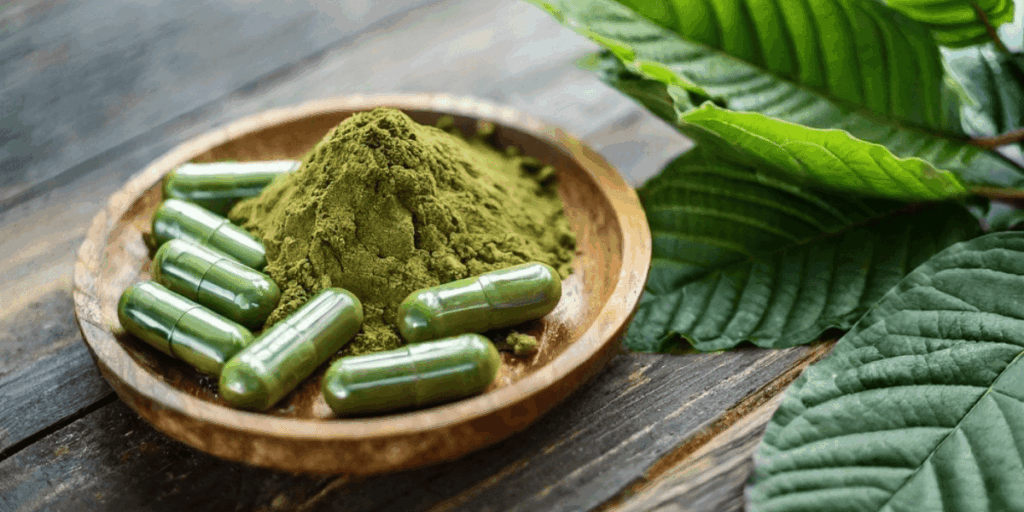
A recent article in PsychiatryOnline highlights growing concern in addiction psychiatry over a synthetic opioid agonist derived from kratom now appearing in vape shops and convenience stores.The piece describes this derivative as “alarmingly potent” and notes that its sale is raising red flags for clinicians watching for emerging “legal highs.”
Unlike traditional kratom products, which are based on botanical leaf extractions, this derivative is chemically modified to amplify opioid receptor activity. The article cautions that its use may pose higher risks of dependence, overdose, and unpredictable side effects than standard kratom formulations. In doing so, it reinforces the need for surveillance, research, and regulation distinguishing natural kratom from engineered derivatives.
Understanding the Chemistry: From Leaf to Synthetic Alkaloid
Kratom (Mitragyna speciosa) has long been used in parts of Southeast Asia in milled or brewed leaf form. Its leaves contain dozens of alkaloids, among which mitragynine is predominant and 7-hydroxymitragynine (7-OH) is a minor but active constituent after metabolic conversion. Surveys and pharmacological work emphasize that natural kratom leaf products generally contain only trace proportions of 7-OH.
In contrast, synthetic derivatives—like the one discussed in the paper are manipulated in labs to escalate the concentration or potency of 7-OH or other alkaloids. Because 7-OH has stronger opioid receptor affinity in preclinical models, such modifications can produce effects more akin to powerful opioids. This chemical divergence underscores why many clinicians and researchers stress that natural kratom and synthetic analogs must be treated as distinct entities in risk assessment and policy.
Clinical and Public Health Implications
The emergence of synthetic kratom derivatives complicates the clinician’s role in identifying misuse and adverse outcomes. Standard toxicology screens often do not detect novel synthetic compounds, which may lead to misdiagnosis or delayed treatment. The PsychiatryOnline commentary urges addiction psychiatrists to remain vigilant for atypical presentations or patterns consistent with high-potency opioid exposure.
At a public health level, these derivatives blur the line between legal herbal products and illicit opioids. The worry is that consumers may wrongly assume safety parity with “natural kratom” when purchasing synthetic versions. Regulatory frameworks and consumer education are challenged to keep pace with marketplace innovation. Health systems already burdened by the opioid crisis may face additional strain if synthetic derivatives proliferate unchecked.
What the Research Says: Kratom, Use, and Risks
Despite growing public use, scientific understanding of kratom is still limited. The U.S. National Institute on Drug Abuse (NIDA) notes that while some individuals report using kratom to manage pain, fatigue, or opioid withdrawal, there is no approved medical use and significant uncertainties remain about safety profiles.
A recent systematic review considers kratom’s role as a harm-reduction agent in substance use disorders, pointing to potential benefits but also substantial caveats: variable product quality, dependence risk, and case reports of serious adverse events.
Another important angle is drug interactions. A 2025 review in Pharmaceutics highlights that kratom’s alkaloids may interact with prescription medications—altering their metabolism or effect—and raises clinical caution about concomitant use.
In terms of abuse potential, a notable paper (Henningfield et al. 2021) uses an “eight-factor analysis” to assess kratom alkaloids: their pharmacology, public health effects, dependence potential, and so on. That review argued the risk profile of kratom is lower than many controlled opioids and suggested more measured regulation rather than outright scheduling.
Still, all existing human evidence is observational or retrospective—controlled clinical trials are scarce. As a result, both safety and efficacy remain incompletely understood.
Market Trends and Regulatory Challenges
The synthetic derivative spotlighted in PsychiatryOnline demonstrates how innovation in the kratom space is pushing the regulatory frontier. Unlike simple botanical products, synthetic alkaloids may fall under more stringent drug laws, but establishing legal classification takes time and agency coordination.
Consumer protection in this shifting terrain calls for robust labeling, analytical verification, age restrictions, and perhaps concentration caps. Some stakeholders propose that synthetic derivatives be regulated under drug statutes while botanical kratom remains under a different oversight regime.
Meanwhile, the presence of such high-potency analogs may provoke stricter bans or scheduling on all kratom products—even those with traditional formulations—if regulators fail to distinguish between categories. This could lead to unintended consequences, such as criminalizing low-risk users or stifling scientific research.
Distinguishing Natural Kratom and Synthetic 7-OH Derivatives
A central point in both the PsychiatryOnline article and current scientific discourse is that natural kratom leaf and synthetic or concentrated 7-OH derivatives are fundamentally different in pharmacology and risk. While the plant contains 7-OH only in trace amounts, synthetic processes can magnify its relative presence and receptor activity.
For policy, regulation, and clinical practice, it matters whether a formulation is a botanical extract or an engineered analog. Blurring that distinction could distort how adverse events are attributed, how laws are drafted, and how research is prioritized.
Final Thoughts
The PsychiatryOnline article flags a worrying trend: the rise of a potent synthetic kratom derivative in consumer markets. Yet, despite growing discussion, kratom remains an understudied botanical with ambiguous safety and efficacy in humans. Because of this scientific uncertainty, imposing a blanket ban today may be premature. Advocates such as the American Kratom Association continue to press for regulatory frameworks—quality control, clear labeling, age limits—that preserve access to traditional kratom products while mitigating risks. As science evolves, drawing sharp lines between natural kratom and synthetic analogs will be essential to balanced policy and public health.
References:
- https://psychiatryonline.org/doi/10.1176/appi.pn.2025.10.10.21
- https://nida.nih.gov/research-topics/kratom
- https://www.frontiersin.org/journals/public-health/articles/10.3389/fpubh.2024.1416689/full
- https://pubmed.ncbi.nlm.nih.gov/40522665/
- https://www.frontiersin.org/journals/pharmacology/articles/10.3389/fphar.2021.775073/full
- https://www.americankratom.org/
Get new reporting by email
Federal and state kratom policy, enforcement actions and court decisions — sent when we publish, and nothing else.
The Kratom Council does not sell kratom. This list is used only to send our own articles — never product marketing, and it is never shared with or merged into any retailer’s mailing list. Unsubscribe any time.