
Industry
Cleveland Sees Surge in Synthetic Kratom Sales, Prompting Regulatory Concerns
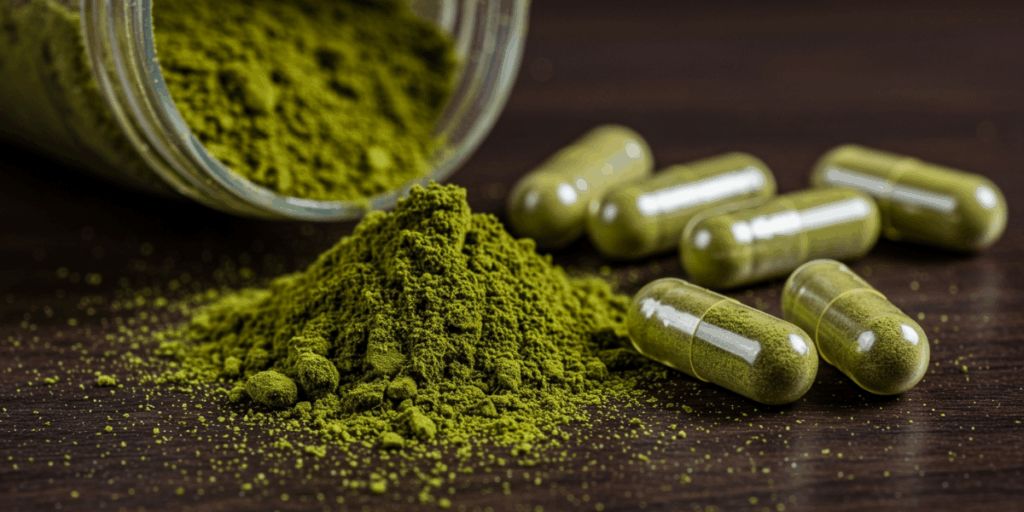
CLEVELAND, OH — The number of Cleveland-area retailers selling synthetic kratom products has more than tripled in the past two years, according to a recent study by Case Western Reserve University researchers. The findings, released this month and reported by Ideastream Public Media, show 132 convenience stores, gas stations, and smoke shops now carry synthetic kratom or related products, compared with just 29 stores in 2023.
City health officials say the sharp increase underscores a need for clearer oversight and consumer education as new kratom-derived products enter the marketplace.
Local Officials Cite Uncertainty Over Product Safety
Cleveland Public Health Director Dr. David Margolius said many of the items being sold locally are labeled as kratom but contain synthetic derivatives or concentrated alkaloids whose composition is difficult to verify.
“We don’t really know what you’re getting with different doses,” Margolius told Ideastream, adding that certain synthetic formulations could have stronger effects similar to opioids.
Unlike traditional kratom leaf powder or tea—long used in parts of Southeast Asia—some of the synthetic or concentrated versions now appearing in U.S. markets are chemically altered to increase potency. These products often include higher levels of 7-hydroxymitragynine (7-OH), a naturally occurring but powerful kratom alkaloid that can also be synthesized or concentrated in laboratories.
Health experts warn that inconsistent labeling and the absence of standardized testing make it difficult for consumers to distinguish between natural and modified products.
Kratom’s Background and Chemistry
Kratom (Mitragyna speciosa) is a tropical tree native to Thailand, Indonesia, and Malaysia. Its leaves contain more than 40 alkaloids, the two most studied being mitragynine, which typically makes up over 60% of the total alkaloid content, and 7-hydroxymitragynine, which usually occurs in trace amounts.
In the body, small amounts of mitragynine can metabolize into 7-OH, contributing to kratom’s physiological activity. However, when 7-OH is chemically isolated, synthesized, or concentrated, its pharmacological potency increases significantly. Laboratory studies show that 7-OH binds more strongly to µ-opioid receptors than mitragynine, producing opioid-like effects at lower doses.
Researchers emphasize that this does not make kratom itself an opioid but rather a plant containing compounds that can interact with similar receptor pathways. In its raw or minimally processed form, kratom’s effects are typically milder and vary widely depending on strain, dosage, and preparation.
Synthetic Derivatives Under Scrutiny
The U.S. Food and Drug Administration (FDA) has not approved kratom for medical use and continues to monitor reports of adverse reactions. The agency has issued advisories warning consumers about products marketed as “synthetic kratom” or “enhanced kratom”, which may contain chemically modified alkaloids or undisclosed additives.
Several states, including Colorado and Texas, have introduced or passed laws restricting synthetic or highly concentrated kratom derivatives, while leaving natural kratom leaf products legal under regulated conditions.
Toxicologists note that while cases of kratom-related harm remain relatively uncommon, exposure reports involving synthetic versions have increased. The Texas Department of State Health Services, for instance, linked a series of emergency-room visits earlier this year to products advertised as “7-OH kratom.”
Ongoing Research and Calls for Regulation
Scientific understanding of kratom’s long-term effects remains limited. Studies suggest its impact on users can vary depending on dosage and formulation, with mild stimulant-like properties at low doses and sedative-like properties at higher ones.
Researchers at Johns Hopkins Medicine have called for more clinical data to separate risks associated with natural kratom leaf use from those tied to adulterated or synthetic preparations.
Public health specialists broadly agree that policy responses should focus on transparency, labeling accuracy, and testing standards rather than immediate prohibition. Without these measures, experts warn, consumers are left to navigate an increasingly complex market with limited information about what they are purchasing.
Distinguishing Natural Kratom from Synthetic 7-OH
Researchers stress that natural kratom and concentrated 7-OH products are chemically and pharmacologically distinct. Natural kratom leaves contain small, naturally balanced alkaloid concentrations; synthetic 7-OH is often a laboratory-amplified compound with far higher receptor activity.
This distinction is central to ongoing policy discussions. Advocacy and scientific groups have repeatedly urged regulators to address synthetic products separately from traditional kratom preparations to avoid conflating the two.
Conclusion
The Cleveland study highlights how quickly new psychoactive products can spread in the absence of clear regulation. While both kratom and 7-hydroxymitragynine originate from the same plant, they differ markedly in strength and risk profile.
Health authorities continue to debate how best to regulate these substances—balancing public-health concerns with the recognition that natural kratom remains a distinct botanical with a long history of traditional use.
Efforts by groups such as the American Kratom Association aim to establish safety standards and consumer protections that could help ensure kratom’s responsible use without encouraging synthetic or unregulated alternatives.
References:
- https://www.ideastream.org/health/2025-10-08/cleveland-stores-selling-synthetic-kratom-have-tripled-in-number-since-2023
- https://www.frontiersin.org/journals/pharmacology/articles/10.3389/fphar.2021.751656/full
- https://pmc.ncbi.nlm.nih.gov/articles/PMC6598159/
- https://www.fda.gov/news-events/public-health-focus/fda-and-kratom
- https://www.dshs.texas.gov/news-alerts/public-health-officials-warn-people-not-use-7-oh-products
- https://nida.nih.gov/research-topics/kratom
- https://jamanetwork.com/journals/jamanetworkopen/fullarticle/2814305
- https://www.americankratom.org/
Get new reporting by email
Federal and state kratom policy, enforcement actions and court decisions — sent when we publish, and nothing else.
The Kratom Council does not sell kratom. This list is used only to send our own articles — never product marketing, and it is never shared with or merged into any retailer’s mailing list. Unsubscribe any time.